What Is a Cloud Attendance System?
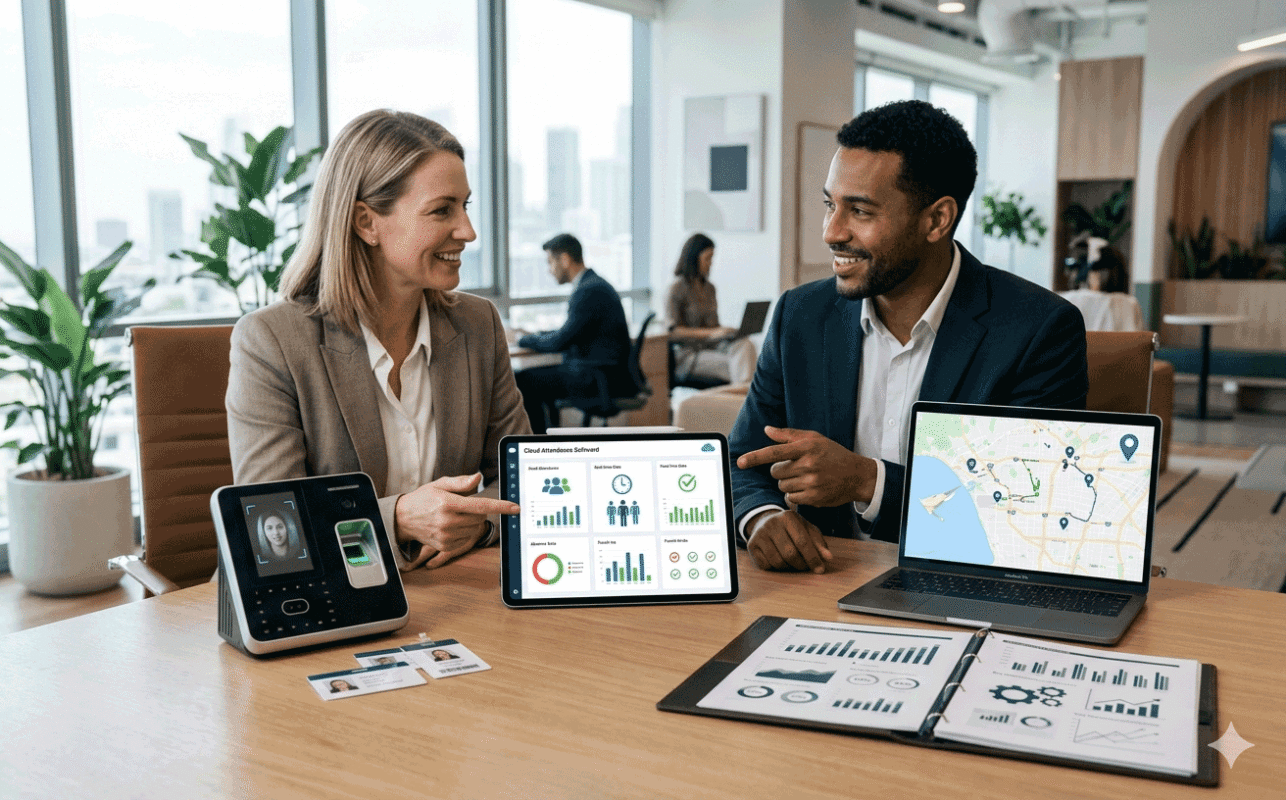
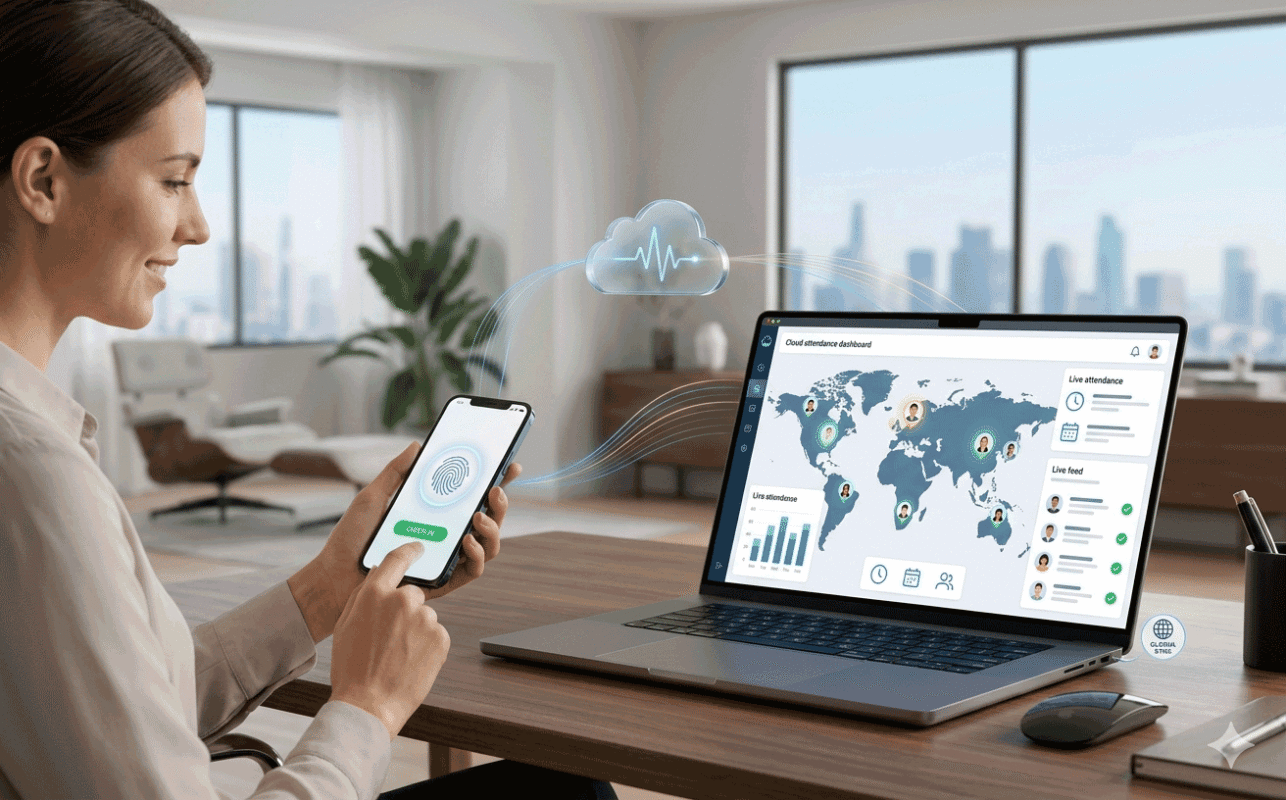
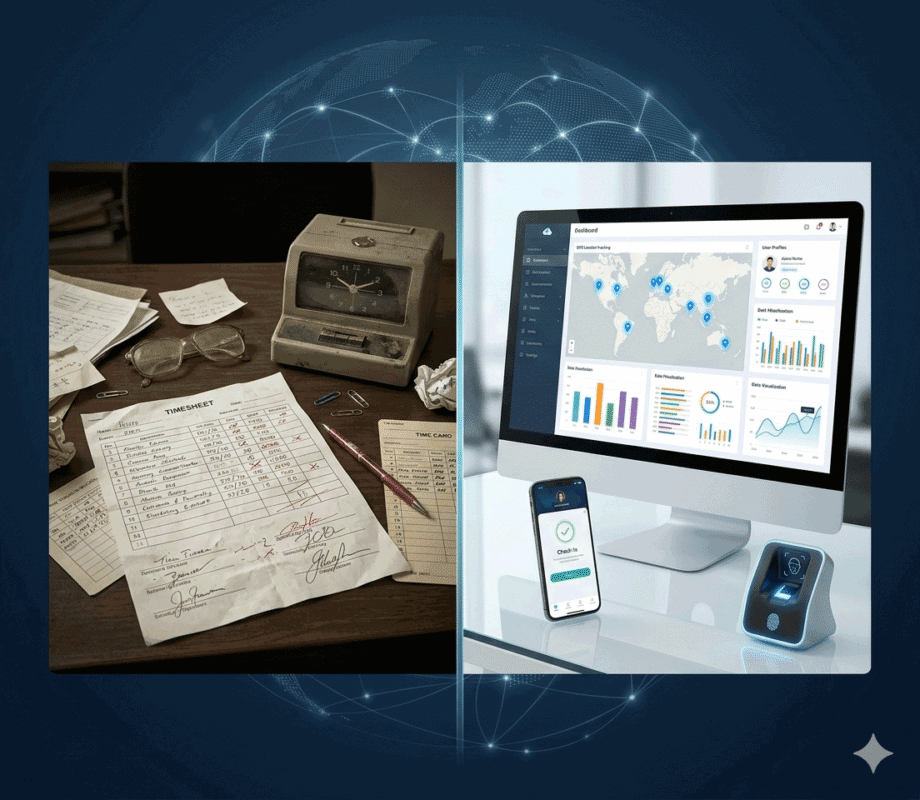
A cloud attendance system is an internet-based employee attendance management platform that allows businesses to collect, process, monitor, and manage attendance data in real time through cloud servers.
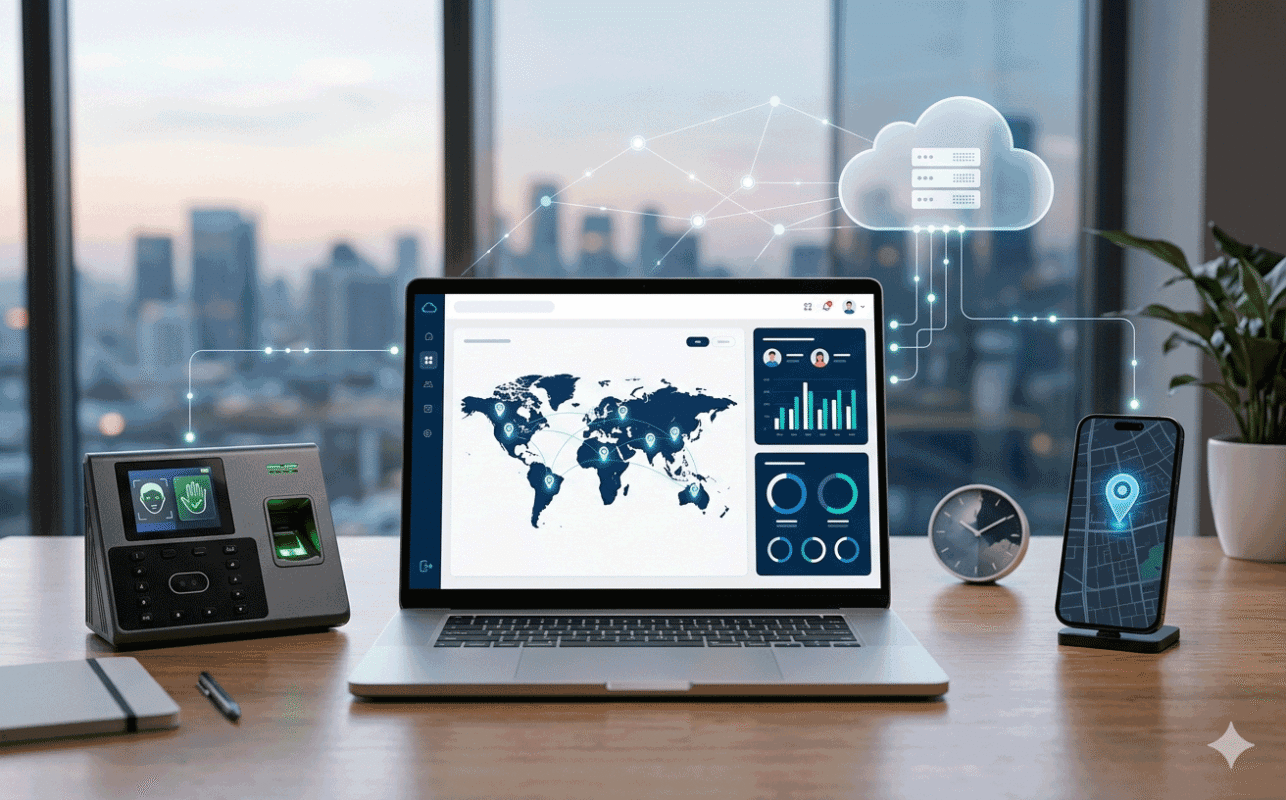
Unlike traditional attendance software that depends on a single office computer, cloud attendance systems connect attendance devices, mobile phones, tablets, and web dashboards directly to online servers. This allows managers and employees to access attendance information anytime and from anywhere.
Modern cloud attendance systems often include:
- Biometric attendance devices
- Face recognition terminals
- Fingerprint attendance machines
- GPS mobile attendance
- Online scheduling
- Leave and overtime approval
- Real-time attendance reports
- Multi-branch workforce management
- Remote employee tracking
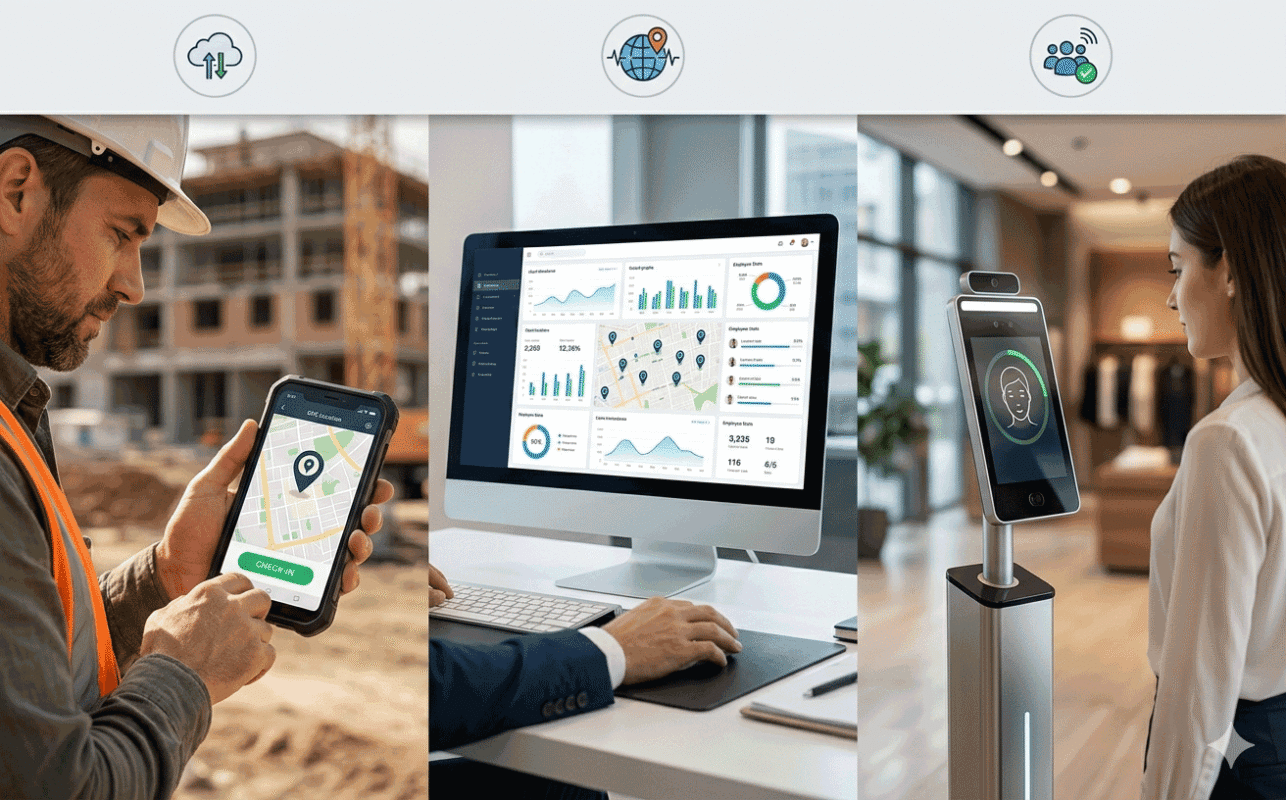
Cloud attendance solutions are widely used by security companies, construction projects, schools, retail chains, outsourcing companies, and organizations with distributed workforces.
How Does a Cloud Attendance System Work?
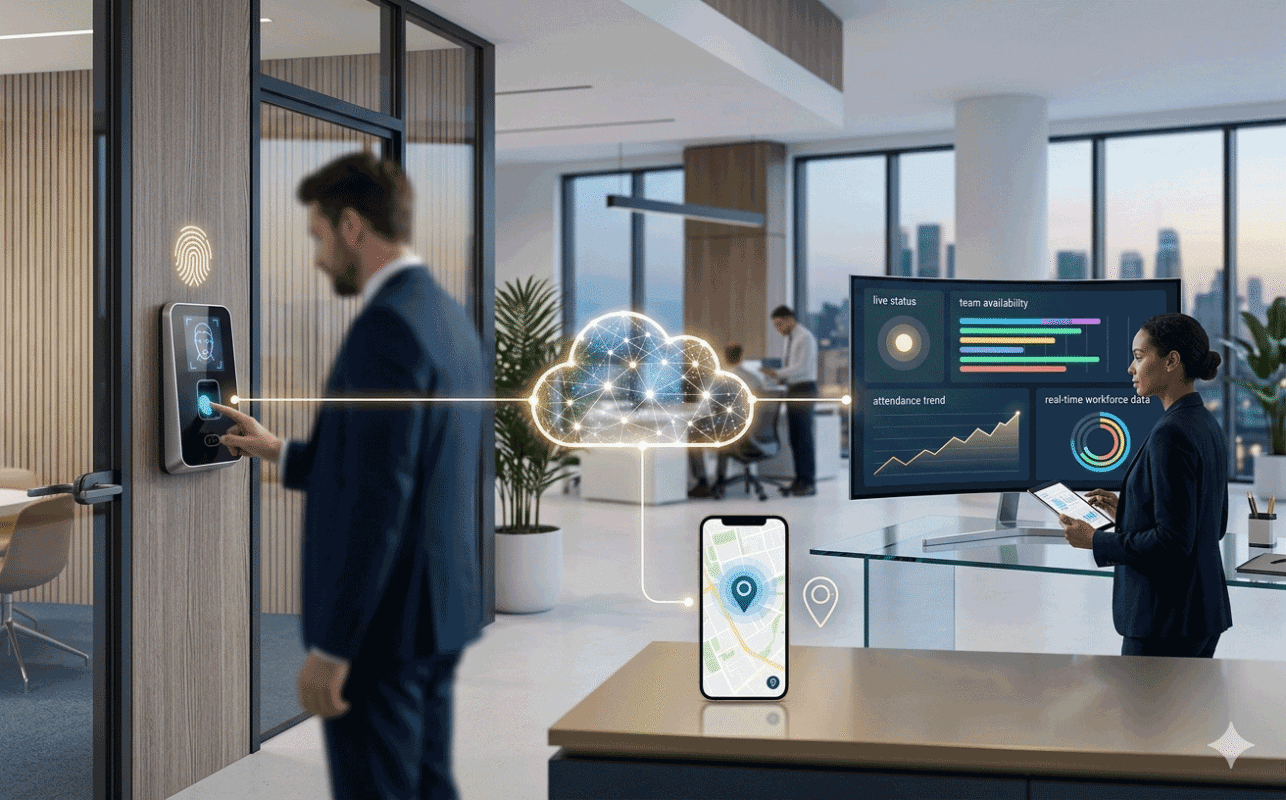
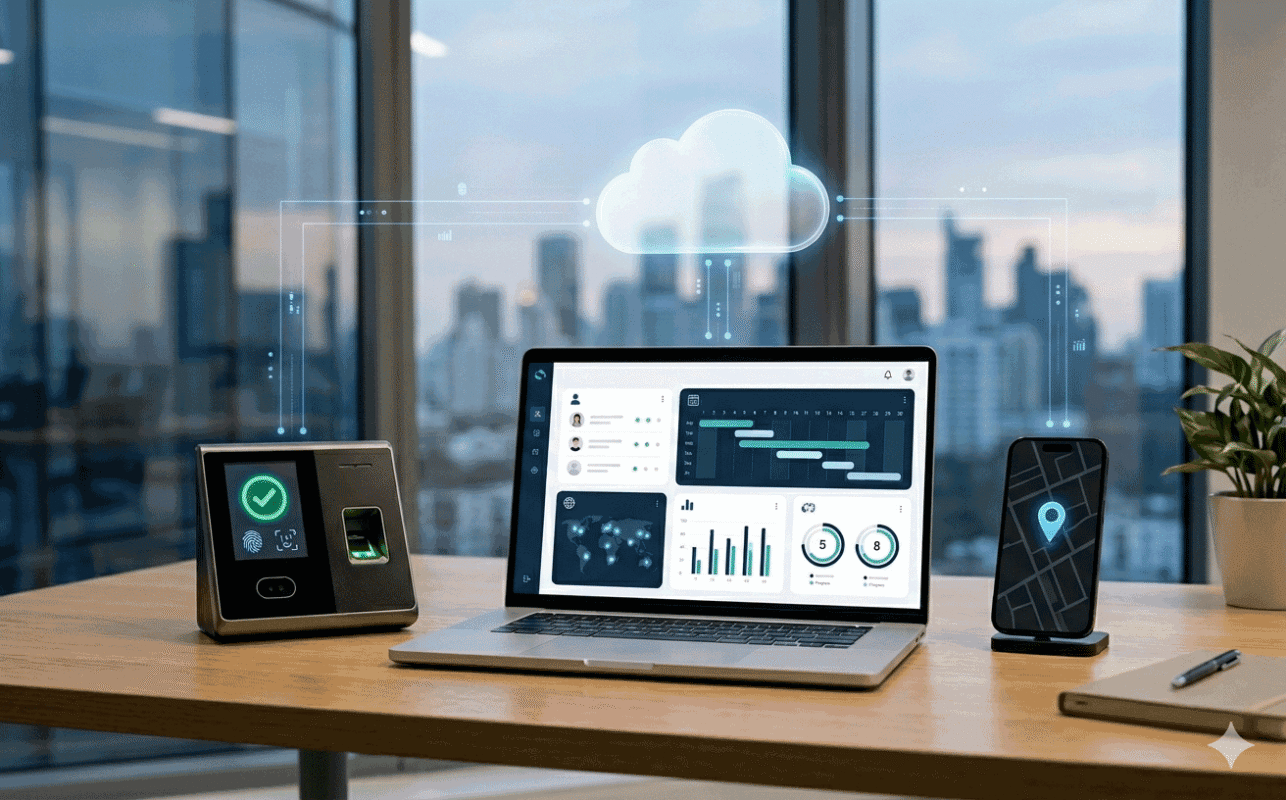
A cloud attendance system connects attendance terminals, employee mobile devices, and management dashboards through internet servers.
The process usually works like this:
1. Attendance Collection
Employees clock in using:
- Face recognition devices
- Fingerprint scanners
- RFID cards
- Mobile GPS attendance apps
- Tablets or Android devices
These attendance terminals can use LAN, WiFi, or 4G communication depending on deployment environments.
2. Real-Time Data Transmission
Attendance records are automatically sent to cloud servers through the internet.
Even if the network connection is temporarily interrupted, advanced attendance devices can automatically reconnect and resend delayed attendance records once the network becomes available again.
This is especially important for:
- Outdoor construction sites
- Security patrol locations
- Mobile workforce operations
- Transportation vehicles
- Remote areas with unstable internet
3. Automatic Attendance Processing
The cloud server automatically processes attendance data using predefined attendance rules such as:
- Work schedules
- Shift rotations
- Flexible working hours
- Overtime rules
- Late arrival calculations
- Leave requests
- Multi-timezone settings
Managers no longer need to manually collect attendance records from devices or process spreadsheets.
4. Web and Mobile Access
Managers and employees can access the attendance system through web browsers or mobile devices.
Employees can:
- View attendance records
- Check work schedules
- Submit leave applications
- Request overtime approval
- Use GPS attendance
- Review attendance reports
Managers can:
- Monitor real-time attendance
- View department reports
- Manage multiple branches
- Track workforce locations
- Approve requests
- Analyze attendance statistics
Why Businesses Are Moving to Cloud Attendance Systems
Traditional attendance software often has many limitations.
Most traditional systems depend on:
- Local office computers
- Manual data collection
- Single-location management
- Offline attendance processing
- Limited remote access
If the office computer is offline, attendance data processing may stop completely.
Cloud attendance systems solve these problems by providing centralized and automated workforce management.
Key advantages include:
Real-Time Attendance Monitoring
Managers can instantly see attendance status across multiple locations.
Remote Workforce Management
Ideal for remote teams, field workers, security guards, and construction staff.
Multi-Branch Management
Businesses can centrally manage branches, stores, schools, and departments from one system.
Employee Self-Service
Employees can independently check schedules, reports, and attendance applications.
Reduced Administrative Work
Automation reduces manual attendance calculations and reporting tasks.
Faster Decision Making
Real-time reports help managers identify attendance issues immediately.
Recommended Solution
Looking for a professional cloud attendance system for your business?
EPORDO provides cloud-based attendance solutions with:
- Biometric attendance devices
- GPS attendance tracking
- Mobile attendance management
- Real-time workforce monitoring
- Multi-location attendance management
- Flexible shift scheduling
- Employee self-service portals
- Real-time analytics and reports
👉 Explore Our Cloud Attendance System Solution:
https://epordo.com/solutions/cloud-attendance-system/
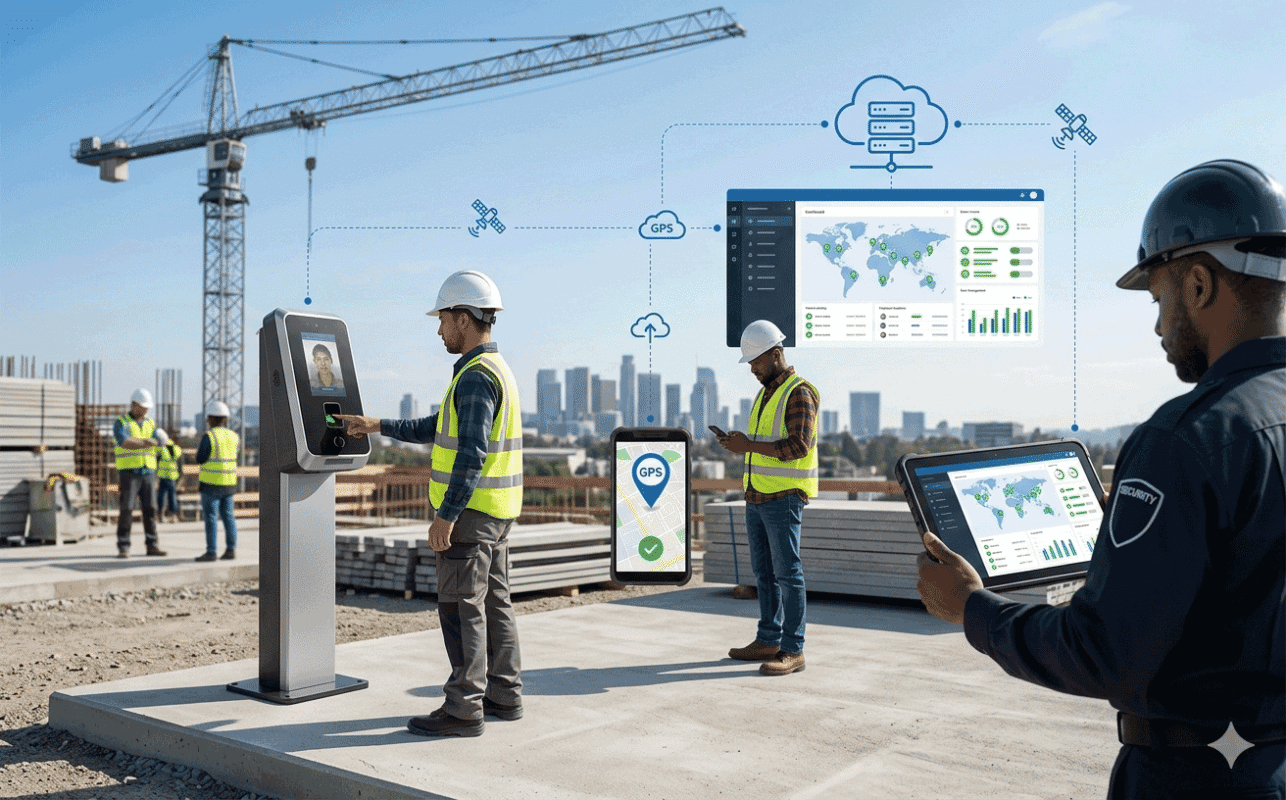
Key Features of a Modern Cloud Attendance System
Biometric Attendance Integration
Modern systems support:
- Face recognition
- Fingerprint verification
- Palm recognition
- RFID card attendance
- Password verification
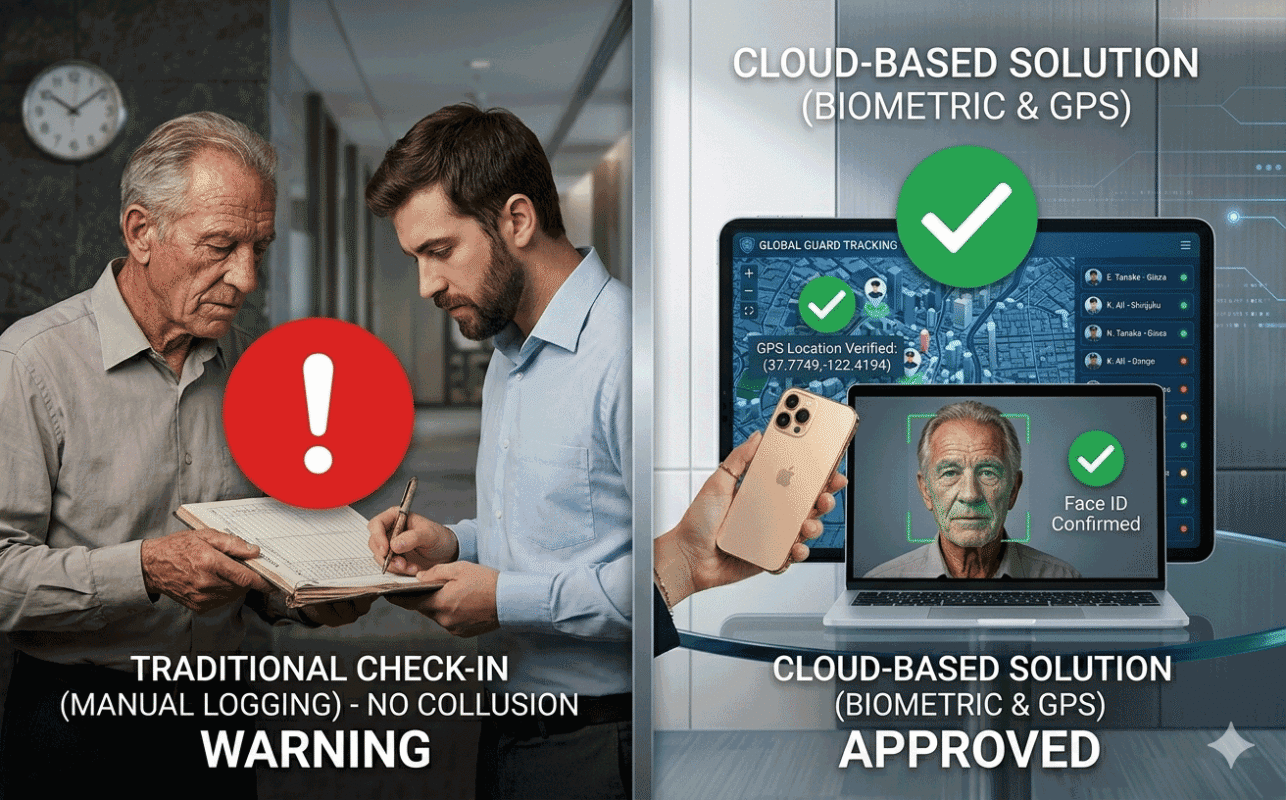
Biometric attendance helps reduce buddy punching and time fraud.
GPS Attendance Tracking
GPS attendance allows employees to check in from approved locations using smartphones.
Managers can configure:
- Attendance zones
- GPS radius limits
- Working locations
- Time restrictions
- Photo verification
- Department-based attendance permissions
This is useful for:
- Field employees
- Security patrols
- Mobile teams
- Temporary job sites
- Service companies
Flexible Shift Scheduling
Cloud attendance systems can support:
- Department shifts
- Rotating schedules
- Weekly schedules
- Monthly schedules
- Flexible work hours
- Overnight shifts
This helps businesses manage complex workforce operations more efficiently.
Permission and Role Management
Advanced systems provide hierarchical permission control.
For example:
- Branch managers can manage branch employees
- HR managers can manage personnel records
- Clients can access attendance reports
- Department supervisors can view team attendance
This allows large organizations to share attendance data securely without management conflicts.
Real-Time Reports and Analytics
Cloud attendance software can generate:
- Daily reports
- Weekly reports
- Monthly reports
- Exception reports
- Department statistics
- Overtime summaries
- Attendance trends
- Workforce analytics dashboards
Visual reports help managers quickly identify operational problems and workforce patterns.
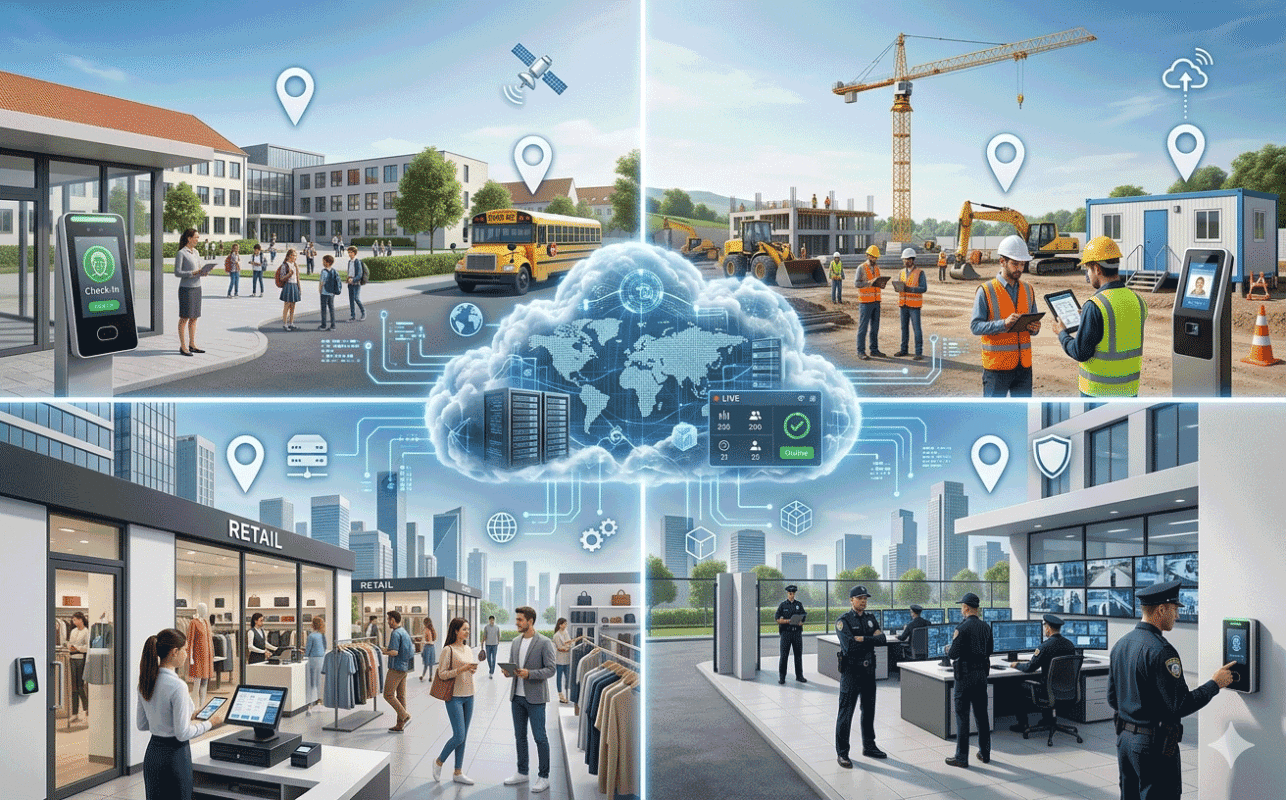
Best Industries for Cloud Attendance Systems
Cloud attendance systems are especially useful for organizations with distributed workforces or multiple operating locations.
Common industries include:
- Security guard companies
- Construction projects
- Schools and education organizations
- Retail chains
- Cleaning service companies
- Outsourcing companies
- Logistics operations
- Manufacturing businesses
- Healthcare organizations
- Transportation services
Cloud Attendance System vs Traditional Attendance Software
| Feature | Traditional Attendance Software | Cloud Attendance System |
|---|---|---|
| Remote Access | Limited | Available Anywhere |
| Real-Time Processing | Usually No | Yes |
| Multi-Branch Support | Limited | Strong |
| Mobile Attendance | Rare | Built-In |
| GPS Tracking | Rare | Supported |
| Employee Self-Service | Limited | Strong |
| Centralized Management | Difficult | Easy |
| Automatic Updates | Manual | Automatic |
| Data Sharing | Limited | Real-Time |
How Cloud Attendance Improves Workforce Management
Cloud attendance systems are no longer just simple time-tracking tools.
Modern systems help businesses:
- Improve workforce transparency
- Reduce attendance fraud
- Increase operational efficiency
- Simplify employee management
- Improve scheduling accuracy
- Speed up payroll preparation
- Support remote workforce operations
- Centralize attendance management
For businesses operating across multiple branches, cities, or countries, cloud attendance software provides scalable and centralized workforce management.
Final Thoughts
As businesses become more distributed and mobile, traditional attendance systems are becoming increasingly difficult to manage.
Cloud attendance systems provide a more scalable, flexible, and efficient way to manage modern workforces through real-time attendance tracking, GPS monitoring, biometric integration, and centralized workforce management.
For organizations managing remote teams, multi-location operations, or large mobile workforces, cloud attendance software is becoming an essential business management tool.