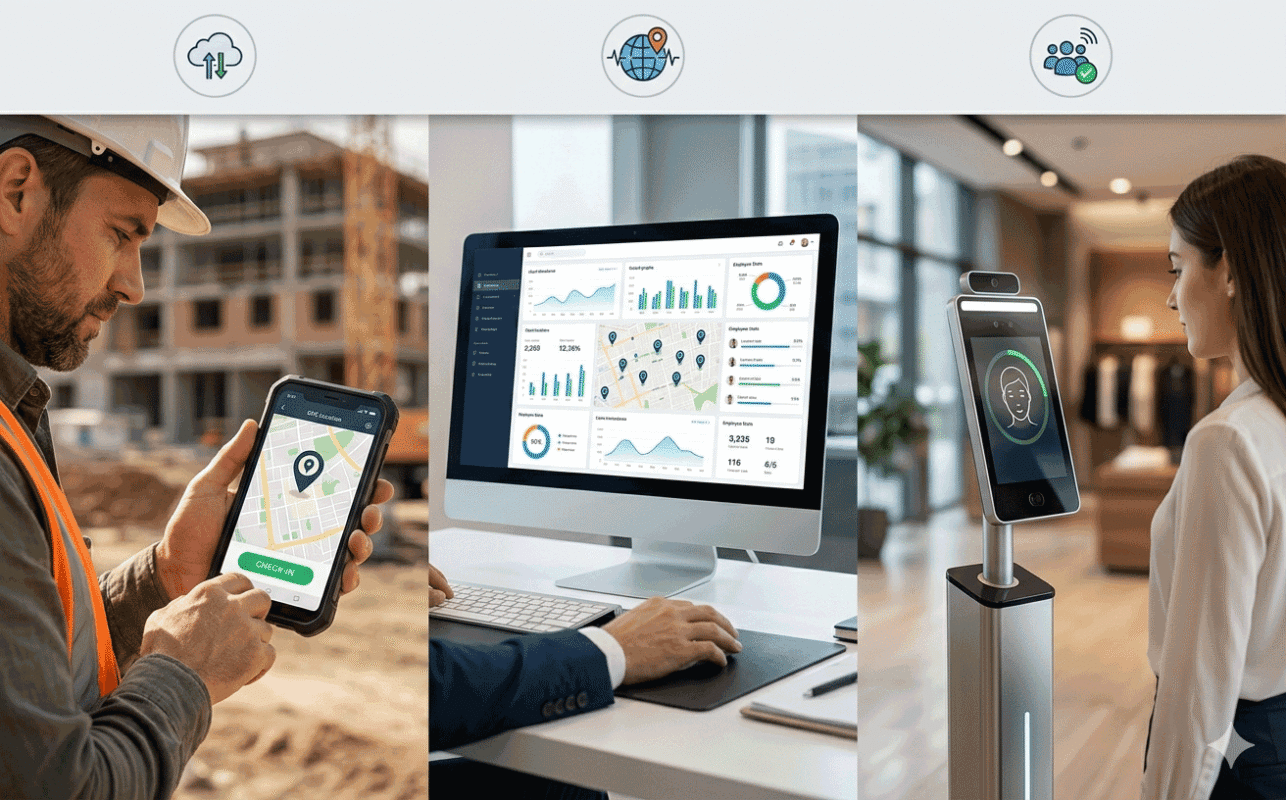
Why Small Businesses Need Cloud Attendance Software
Many small businesses still rely on spreadsheets, paper timesheets, or standalone attendance software.
These approaches often create problems such as:
- Manual attendance calculations
- Attendance errors
- Time theft
- Delayed reporting
- Limited employee visibility
- Difficulty managing remote workers
- Poor scalability
Cloud attendance software solves these challenges by providing centralized workforce management through online platforms accessible anywhere.
What Is Cloud Attendance Software?
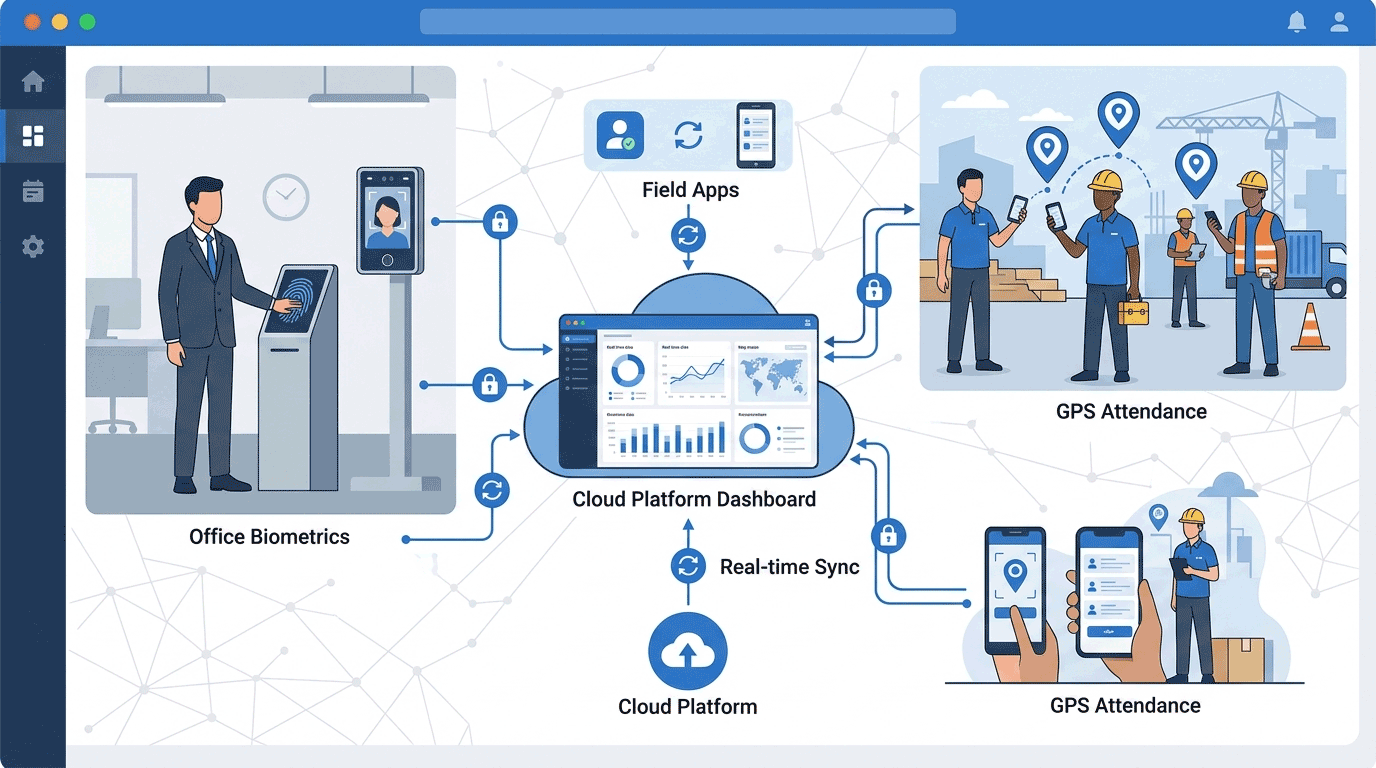
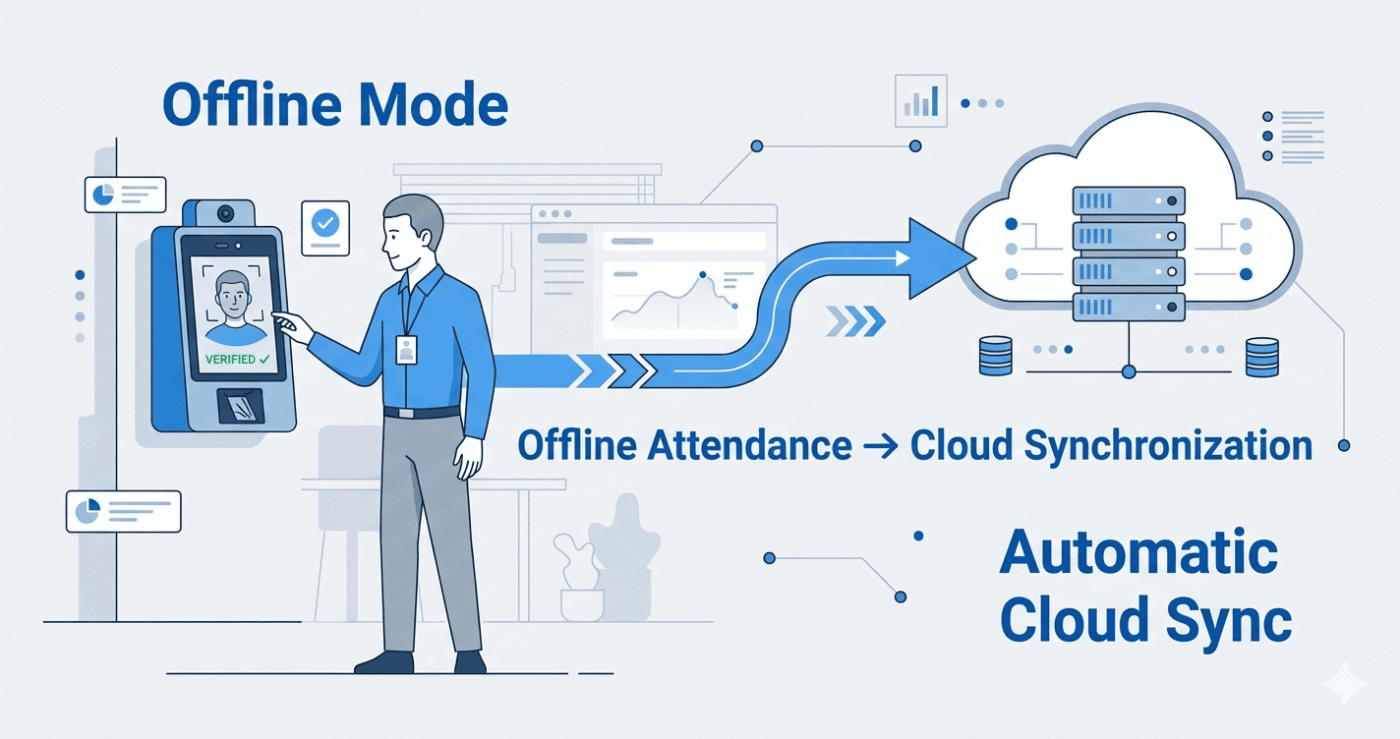
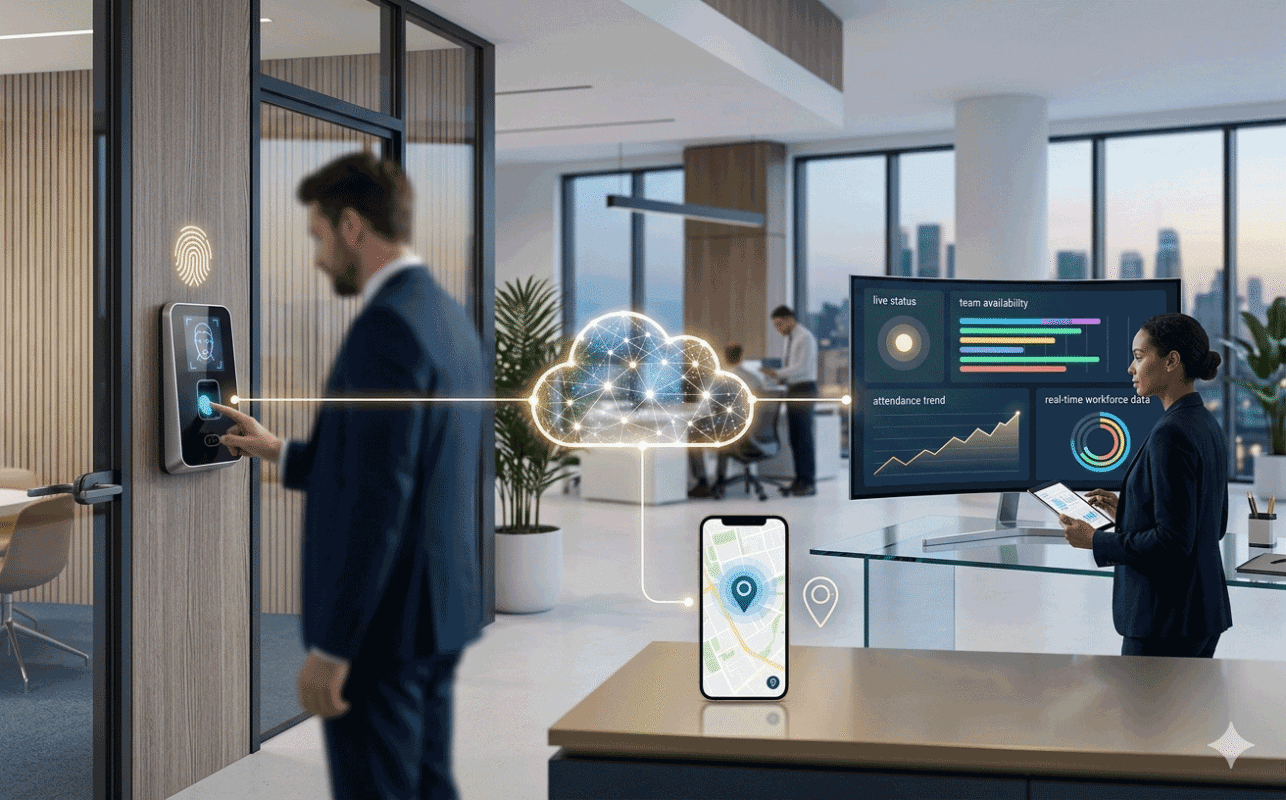
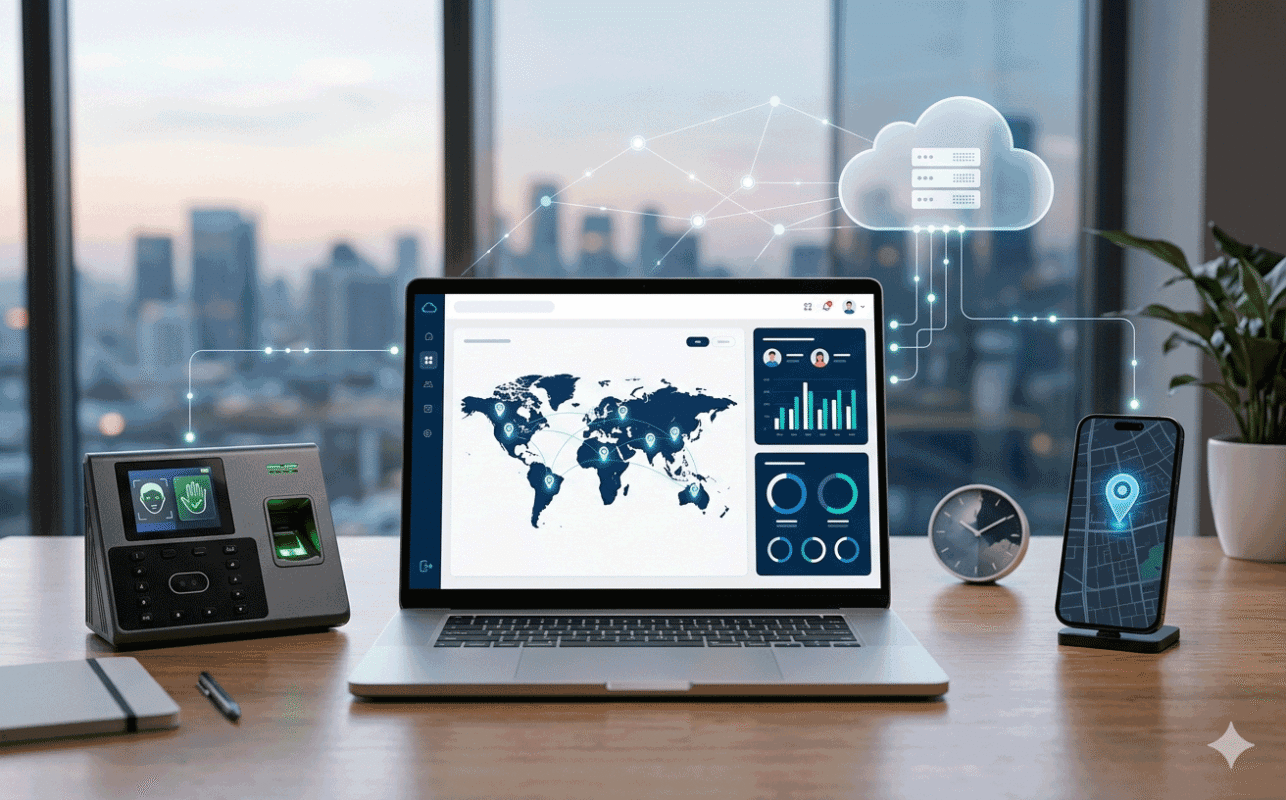
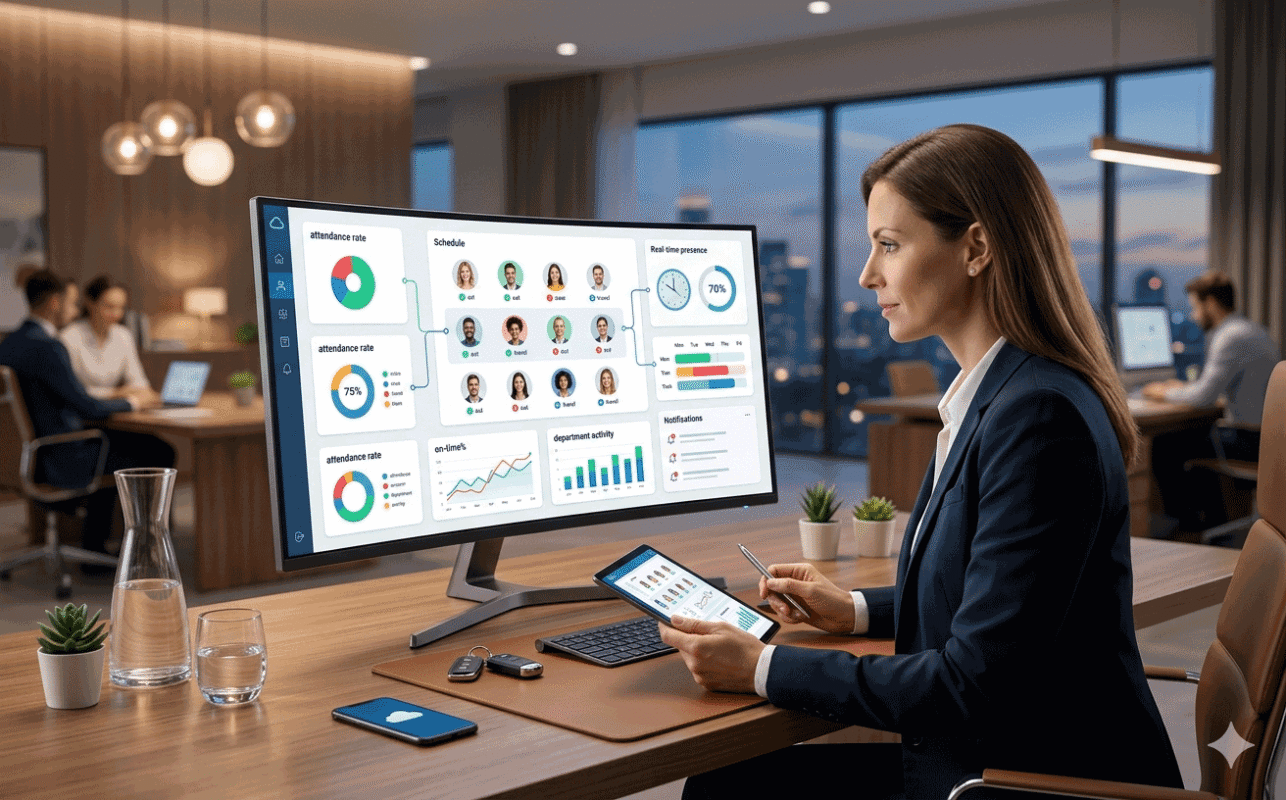
Cloud attendance software is a web-based employee attendance management system that allows businesses to track attendance, work hours, shifts, overtime, GPS location, and biometric records in real time.
Common cloud attendance systems support:
- Fingerprint attendance
- Face recognition attendance
- Mobile attendance
- GPS attendance tracking
- Multi-location workforce management
Industries That Benefit from Cloud Attendance Software
Retail Stores
Track employee attendance across multiple store locations.
Healthcare Facilities
Manage shift-based attendance for nurses and medical staff.
Manufacturing
Monitor workforce attendance across production facilities.
Construction
Track mobile workers and job-site attendance using GPS.
Security Services
Verify attendance of guards working at different client locations.
What Should Small Businesses Look For?
Not every attendance system is designed for small business growth.
The best cloud attendance software should provide:
- Easy deployment
- Affordable scalability
- Real-time attendance tracking
- Mobile access
- Employee self-service
- Flexible scheduling
- Reporting and analytics
- GPS attendance support
- Biometric attendance integration
The goal is to choose a solution that works today and continues supporting your business as it grows.
Recommended Solution
A Cloud Attendance Solution Designed for Growing Businesses
EPORDO cloud attendance system combines:
- Mobile attendance
- GPS attendance tracking
- Face recognition
- Fingerprint attendance
- Employee self-service
- Workforce analytics
Suitable for businesses with remote teams, multiple branches, and growing workforce requirements.
👉 Explore Our Cloud Attendance Solution:
Feature 1: Real-Time Attendance Tracking
One of the biggest advantages of cloud attendance software is real-time visibility.
Managers can instantly view:
- Employee attendance status
- Late arrivals
- Absences
- Overtime activity
- Department attendance summaries
This eliminates the delays associated with traditional attendance systems.
Feature 2: Mobile and Remote Attendance
Many small businesses now manage employees working outside traditional offices.
Examples include:
- Service technicians
- Security guards
- Construction workers
- Sales representatives
- Delivery teams
Mobile attendance allows employees to clock in using smartphones or tablets.
Managers can monitor attendance remotely without requiring employees to visit a physical office.
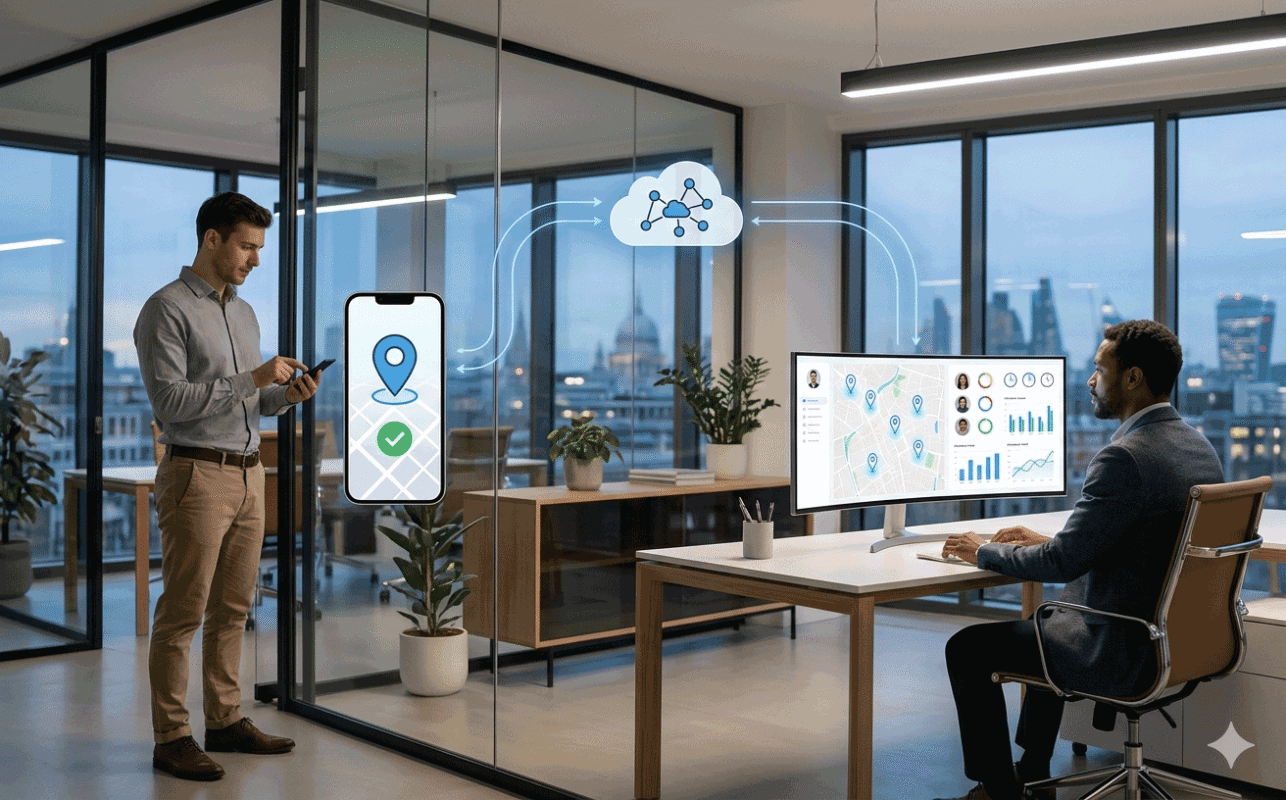
Feature 3: GPS Attendance Tracking
GPS attendance has become one of the most requested features for modern workforce management.
The system can verify:
- Employee location
- Attendance zones
- Geofence restrictions
- Approved job sites
- Mobile workforce activity
GPS attendance is especially valuable for businesses with field employees or multiple work locations.
Feature 4: Biometric Attendance Integration
Biometric attendance improves attendance accuracy.
Modern cloud attendance platforms may support:
- Face recognition
- Fingerprint verification
- Palm recognition
- RFID cards
Biometric verification helps prevent:
- Buddy punching
- Fake attendance
- Manual attendance manipulation
For businesses with physical workplaces, biometric attendance often provides better reliability than manual methods.
Feature 5: Employee Self-Service
Employees should be able to manage attendance-related activities independently.
A good cloud attendance system should allow employees to:
- View attendance records
- Check schedules
- Submit leave requests
- Apply for overtime
- Review attendance reports
Self-service functionality reduces administrative workload and improves transparency.
Feature 6: Flexible Scheduling
Small businesses often require more flexibility than large enterprises.
Look for systems that support:
- Fixed schedules
- Flexible shifts
- Weekly schedules
- Monthly schedules
- Rotating shifts
- Overtime management
Flexible scheduling becomes increasingly important as businesses grow.
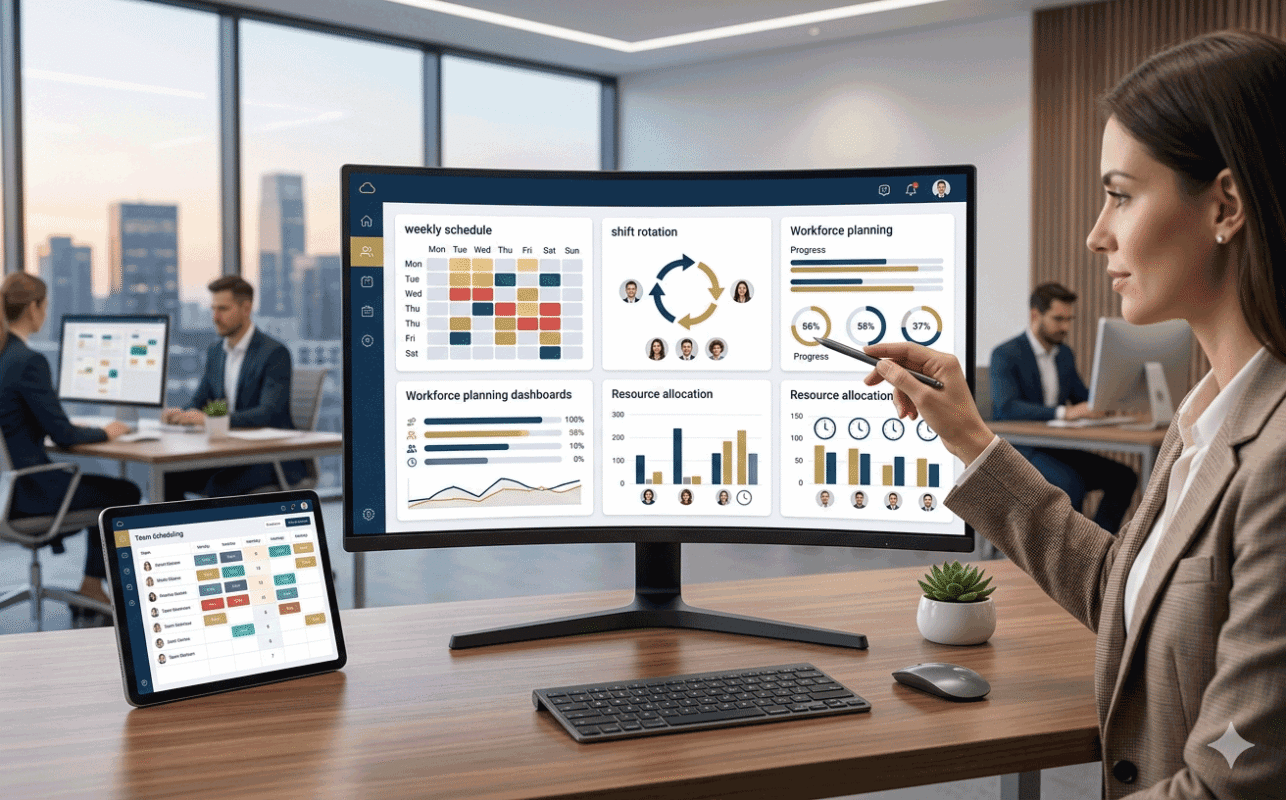
Feature 7: Reporting and Analytics
Attendance data becomes valuable when it is converted into useful reports.
Look for systems that provide:
- Daily reports
- Weekly reports
- Monthly reports
- Overtime summaries
- Attendance exception reports
- Department statistics
Visual dashboards help managers identify attendance issues quickly.
Feature 8: Scalability
Many small businesses outgrow their first attendance solution.
Before selecting a platform, consider whether it can support:
- More employees
- Additional branches
- New departments
- Future attendance devices
- Remote workforce expansion
A scalable cloud attendance platform protects your investment over the long term.
Cloud Attendance Software vs Traditional Attendance Systems
| Feature | Cloud Attendance | Traditional Software |
|---|---|---|
| Real-time access | Yes | Limited |
| Remote attendance | Yes | No |
| GPS tracking | Yes | No |
| Multi-location support | Yes | Limited |
| Scalability | High | Low |
| Maintenance | Low | High |
Common Mistakes Small Businesses Make
Choosing Only by Price
The cheapest solution often becomes the most expensive when replacement costs are considered.
Ignoring Future Growth
Businesses frequently underestimate future workforce expansion.
Overlooking Mobile Attendance
Modern workforces increasingly require mobile and GPS attendance capabilities.
Not Reviewing Reporting Features
Weak reporting often creates management problems later.
Choosing Systems with Limited Integrations
Attendance systems should support future operational requirements.
Comparison Checklist
Before purchasing cloud attendance software, ask:
✅ Does it support mobile attendance?
✅ Does it provide GPS attendance?
✅ Does it support biometric devices?
✅ Can employees access self-service portals?
✅ Does it support multiple locations?
✅ Can it scale as the business grows?
✅ Does it provide advanced reporting?
✅ Does it support flexible scheduling?
Why EPORDO Is a Strong Choice for Growing Businesses
EPORDO cloud attendance system is designed to support both small businesses and growing organizations.
Key capabilities include:
- Face recognition attendance devices
- Fingerprint attendance terminals
- GPS attendance tracking
- Mobile workforce management
- Employee self-service
- Flexible scheduling
- Multi-location management
- Advanced permission controls
- Real-time attendance reporting
- Workforce analytics dashboards
Unlike many basic attendance tools, EPORDO is designed to scale from small teams to large distributed workforces.
Why Trust EPORDO
EPORDO has been providing attendance solutions since 2006.
Our experience includes:
- Fingerprint attendance systems
- Face recognition attendance solutions
- Cloud attendance platforms
- Workforce management software
- Multi-country deployments
Today, organizations in various industries use EPORDO attendance solutions to manage employee attendance across multiple locations.
Final Thoughts
The best cloud attendance software for small businesses in 2026 is not necessarily the cheapest option. The right solution should provide real-time attendance tracking, GPS attendance, biometric integration, employee self-service, reporting, and scalability.
By selecting a platform that supports both current needs and future growth, small businesses can improve workforce visibility, reduce manual administration, and build a stronger foundation for long-term success.