Introduction
Employee attendance directly impacts productivity, labor costs, and operational efficiency. Yet many businesses still rely on paper timesheets, punch cards, or spreadsheets to monitor attendance.
As organizations grow, manual attendance tracking becomes increasingly difficult to manage.
A digital employee attendance tracker provides accurate attendance records, automated reporting, and real-time workforce visibility, making attendance management significantly easier.
What Is an Employee Attendance Tracker?
An employee attendance tracker is a system used to monitor employee working hours, attendance status, clock-in records, clock-out records, absences, and overtime.
Attendance trackers help businesses answer important questions:
- Who is currently working?
- Who arrived late?
- Who is absent today?
- How many hours has each employee worked?
- How much overtime was completed?
Modern work attendance trackers automatically collect attendance data and generate reports for HR and payroll processing.
Common attendance tracker functions include:
- Employee clock-in and clock-out
- Attendance monitoring
- Leave management
- Overtime tracking
- Payroll reporting
- Multi-location workforce management
Why Businesses Need Attendance Tracking
Without an effective staff attendance tracker, businesses often face attendance-related challenges.
Payroll Errors
Manual calculations frequently lead to:
- Incorrect work hours
- Overtime mistakes
- Payroll disputes
Time Theft
Employees may:
- Clock in for coworkers
- Arrive late without records
- Leave early unnoticed
Administrative Burden
Managers spend unnecessary time:
- Reviewing timesheets
- Calculating attendance
- Preparing payroll data
Lack of Workforce Visibility
Without attendance tracking, it becomes difficult to monitor workforce activity across different shifts and locations.
A reliable office attendance tracker helps businesses maintain accountability and improve workforce discipline.
Methods of Attendance Tracking
Businesses use several methods to track attendance, each with its own advantages and limitations.
1. Manual Attendance Tracking
Employees sign paper attendance sheets.
Advantages:
- No technology investment
Disadvantages:
- Human error
- Time-consuming
- Difficult reporting
- High risk of attendance fraud
Best for:
- Very small teams
2. Spreadsheet Attendance Tracking
Attendance records are maintained using spreadsheets.
Advantages:
- Low cost
- Easy to start
Disadvantages:
- Manual updates
- Reporting limitations
- Error-prone calculations
Best for:
- Small offices with limited employees
3. Biometric Attendance Tracking
Employees verify identity using:
- Fingerprint recognition
- Face recognition
Advantages:
- High accuracy
- Prevents buddy punching
- Automated attendance collection
Best for:
- Offices
- Factories
- Warehouses
- Schools
4. Cloud Attendance Tracking
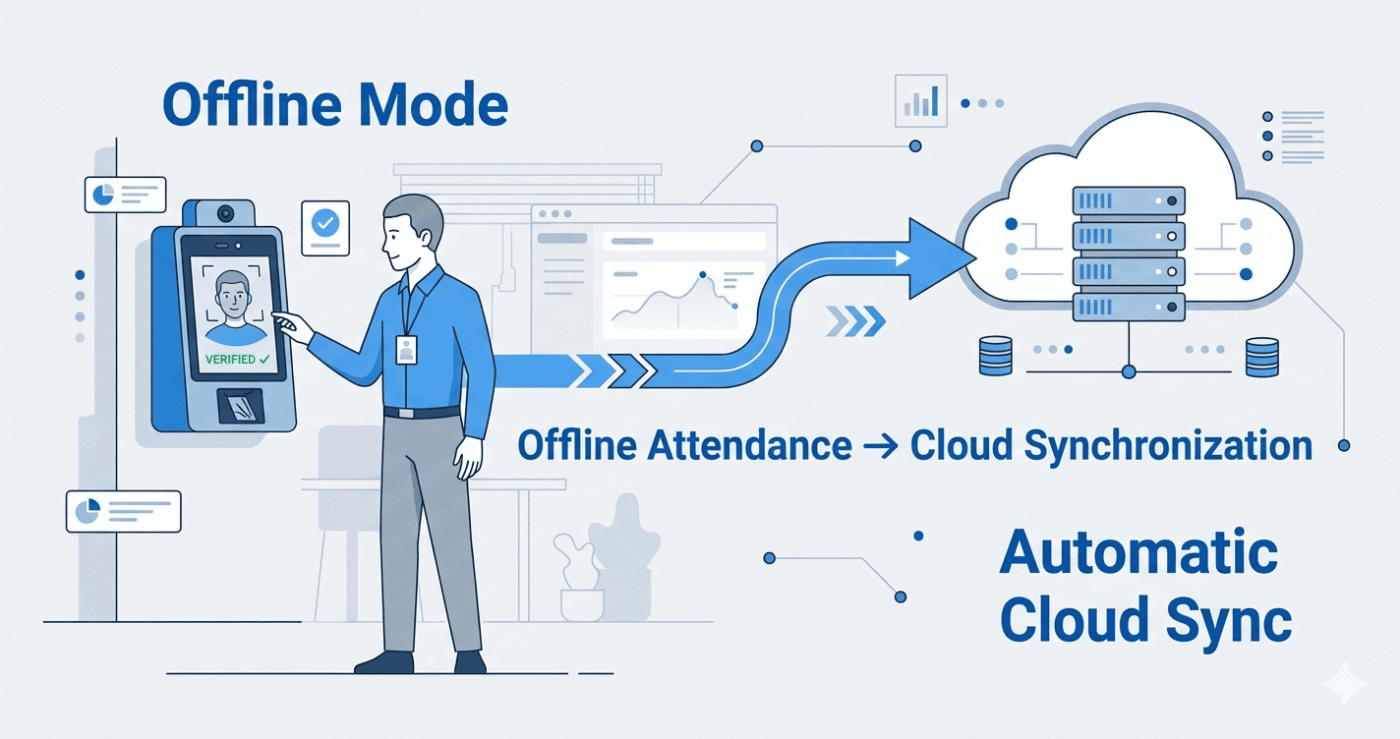
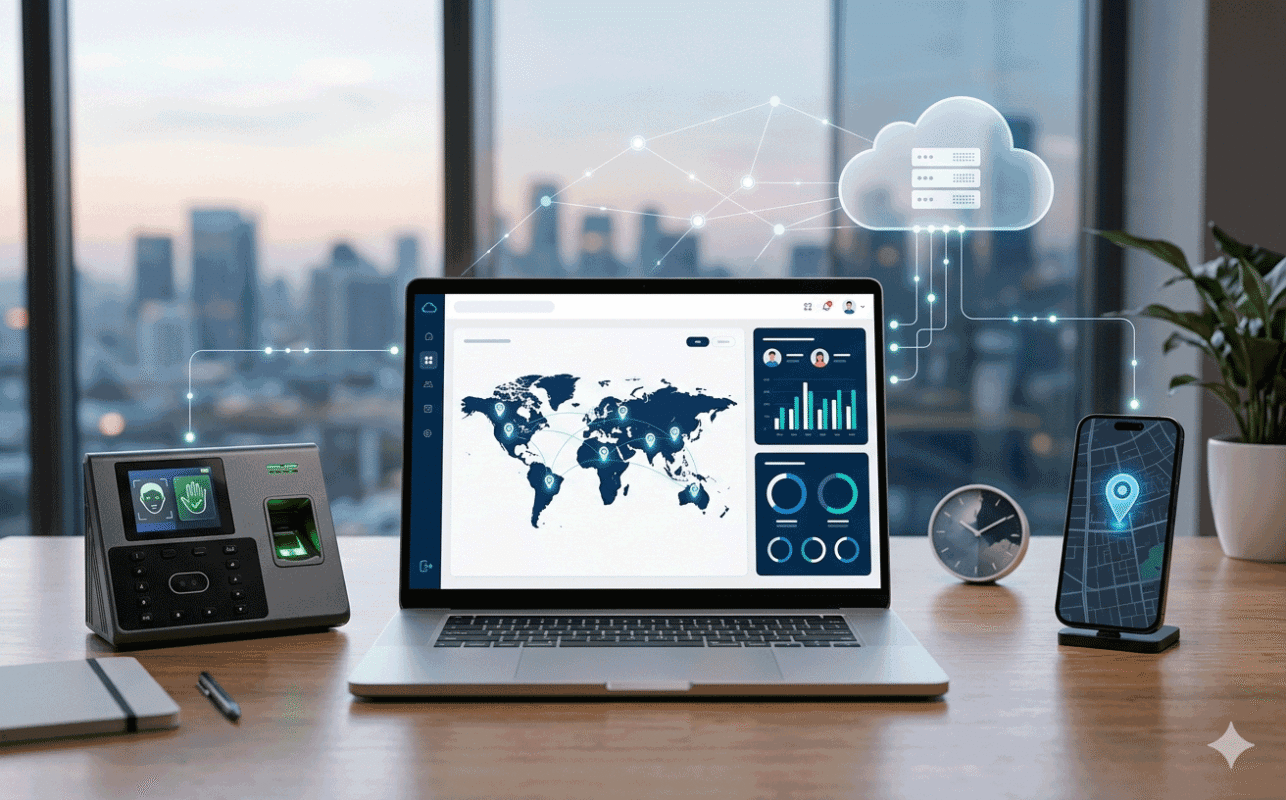
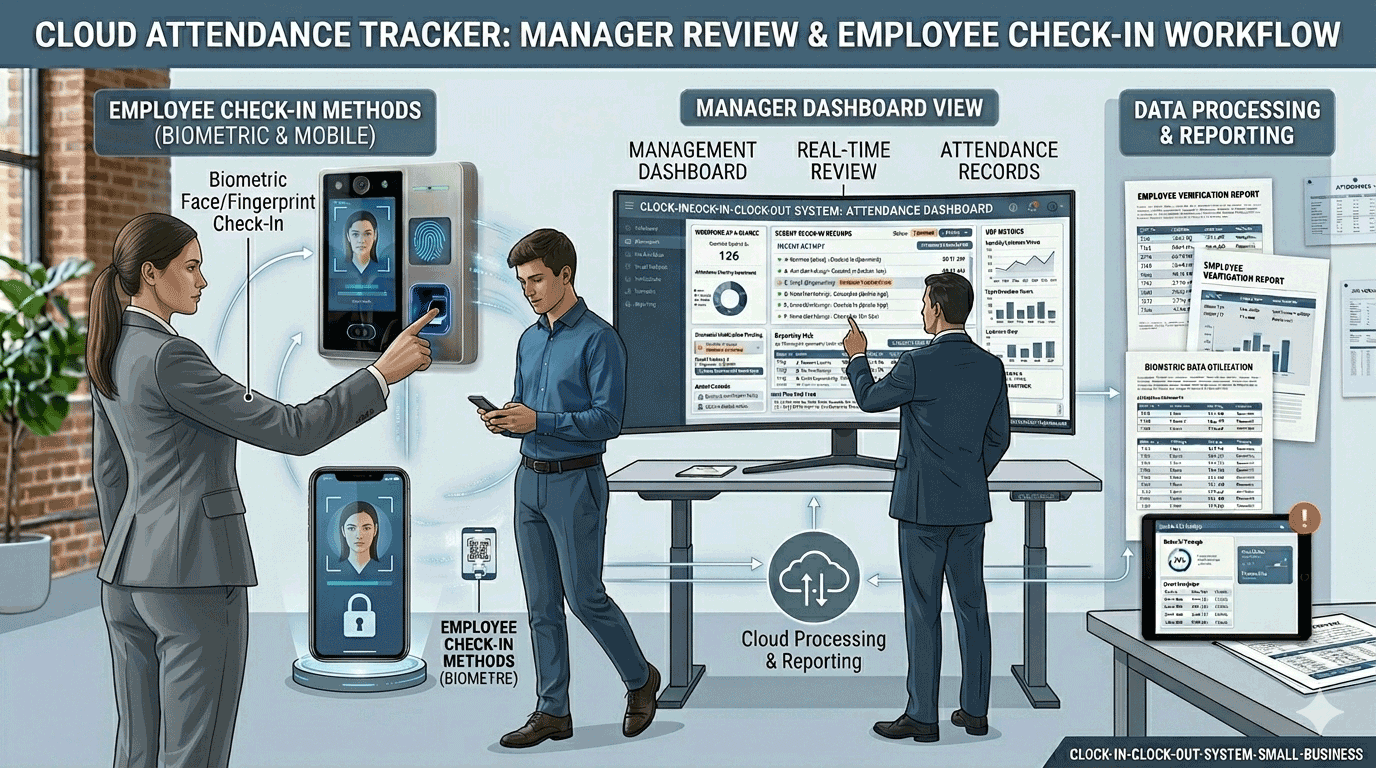
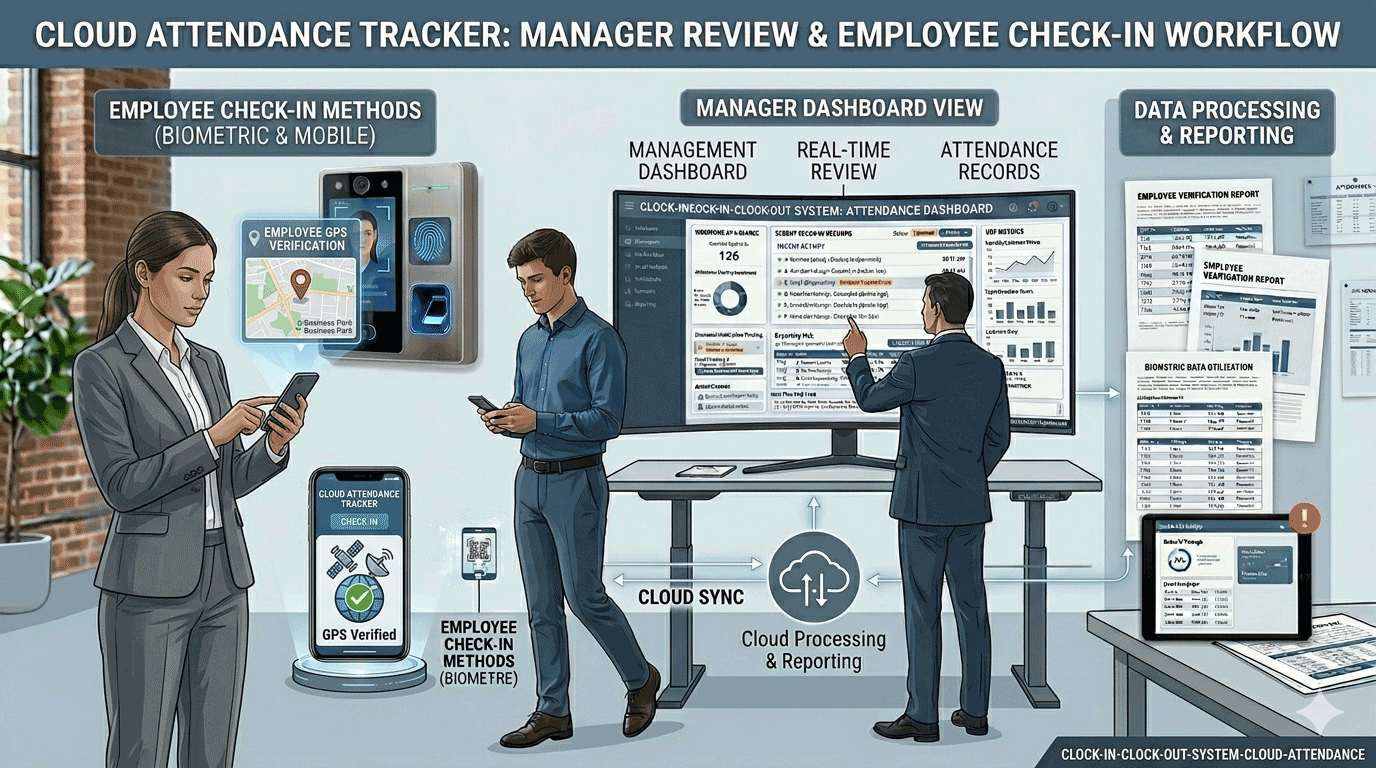
Attendance data is synchronized to a cloud platform in real time.
Employees can check in through:
- Biometric devices
- Mobile apps
- GPS attendance systems
- RFID attendance terminals
Advantages:
- Real-time visibility
- Remote access
- Multi-location support
- Automated reporting
Best for:
- Growing businesses
- Distributed teams
- Multi-site operations
Cloud Attendance Tracker Benefits
Cloud-based attendance tracking has become the preferred solution for modern businesses.
Real-Time Attendance Monitoring
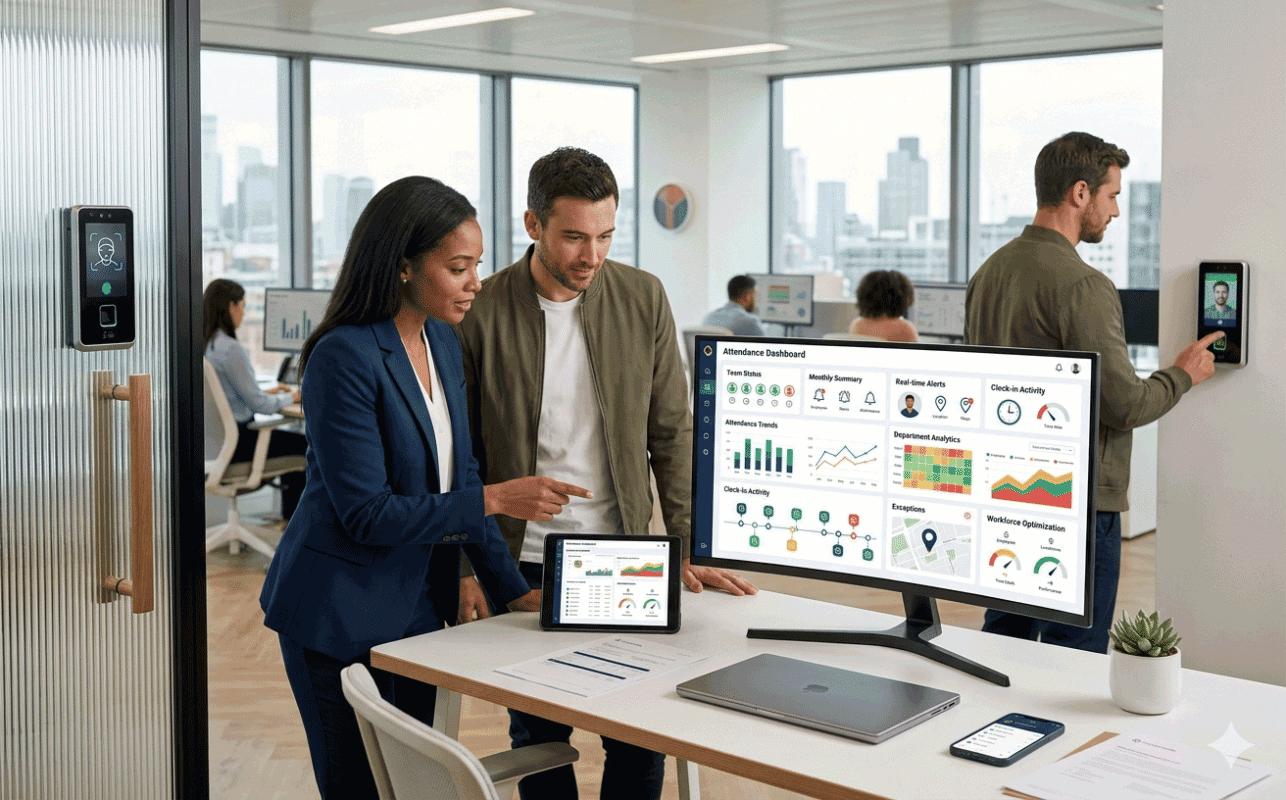
Managers can instantly view attendance records from anywhere.
Improved Payroll Accuracy
Attendance records are automatically calculated and exported for payroll processing.
Multi-Location Workforce Management
Businesses can track employees across multiple branches, sites, or regions from a single platform.
Reduced Attendance Fraud
Cloud attendance systems often include:
- Fingerprint verification
- Facial recognition
- GPS location tracking
- Geofencing
Better Reporting
Generate reports such as:
- Daily attendance
- Monthly attendance
- Overtime summaries
- Absence reports
- Department attendance statistics
Lower Administrative Costs
Automation significantly reduces HR workload and manual data entry.
How to Track Attendance Across Multiple Locations
Managing attendance across multiple sites presents unique challenges.
Businesses often need visibility into:
- Regional offices
- Retail stores
- Construction sites
- Warehouses
- Security locations
A cloud-based employee attendance tracker solves these challenges by centralizing attendance data.
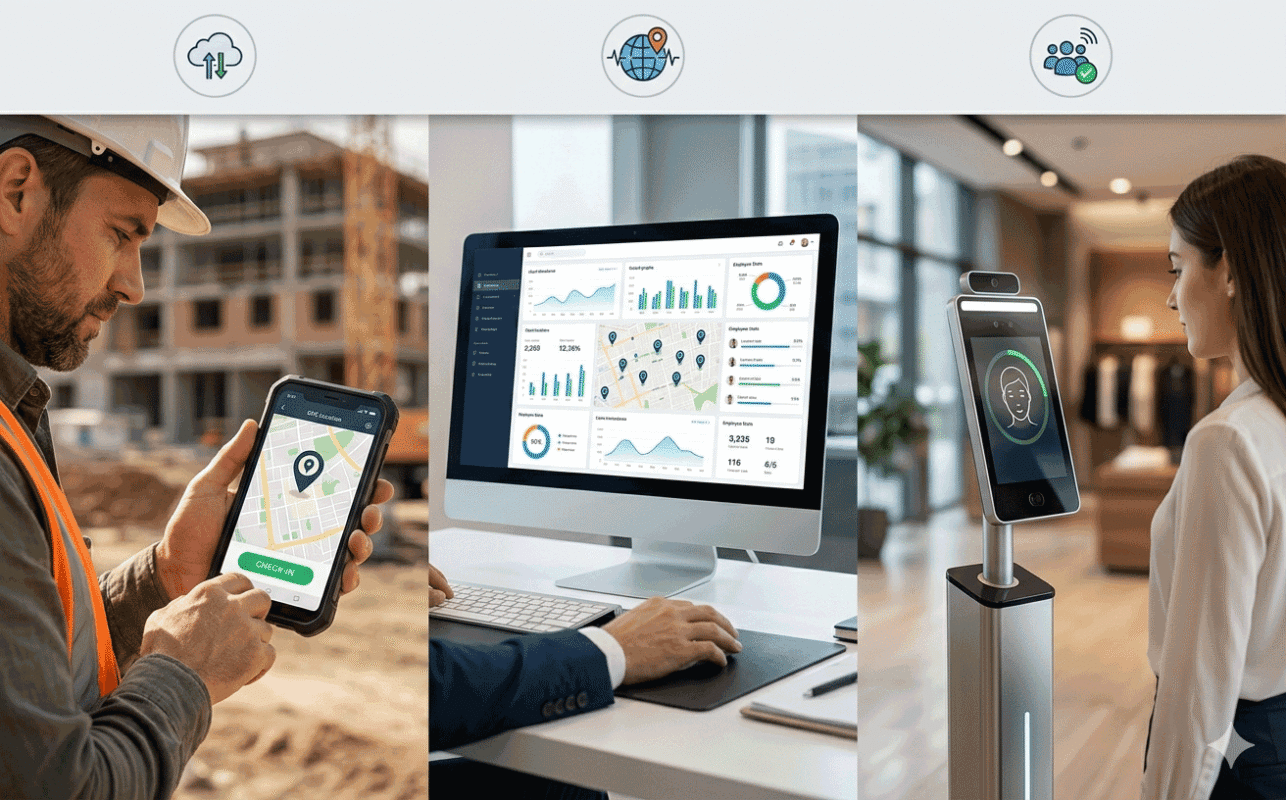
Use Mobile Attendance Apps
Employees can check in from approved locations using smartphones.
Implement GPS Verification
GPS tracking confirms employee locations during attendance events.
Centralize Attendance Data
Attendance records from all locations are synchronized to one dashboard.
Standardize Reporting
Managers can compare attendance performance across different locations using unified reports.
This approach improves operational efficiency while maintaining attendance accuracy.
Cloud Employee Attendance Tracker from Epordo
Epordo provides a cloud-based employee attendance tracker designed for organizations that need accurate and scalable attendance management.
Key features include:
- Fingerprint attendance
- Face recognition attendance
- GPS attendance tracking
- Mobile attendance app
- Real-time cloud synchronization
- Multi-location attendance management
- Payroll-ready reports
- API integration
- Private deployment options
Whether you manage a single office or multiple locations, Epordo helps simplify attendance tracking and workforce management.
Conclusion
An employee attendance tracker helps businesses improve attendance accuracy, reduce payroll errors, and gain better visibility into workforce operations.
While manual and spreadsheet tracking methods may work for small teams, cloud-based attendance tracking offers superior automation, reporting, and scalability.
For businesses with multiple locations or growing workforces, a cloud attendance tracker provides the flexibility and control needed to manage attendance efficiently.